
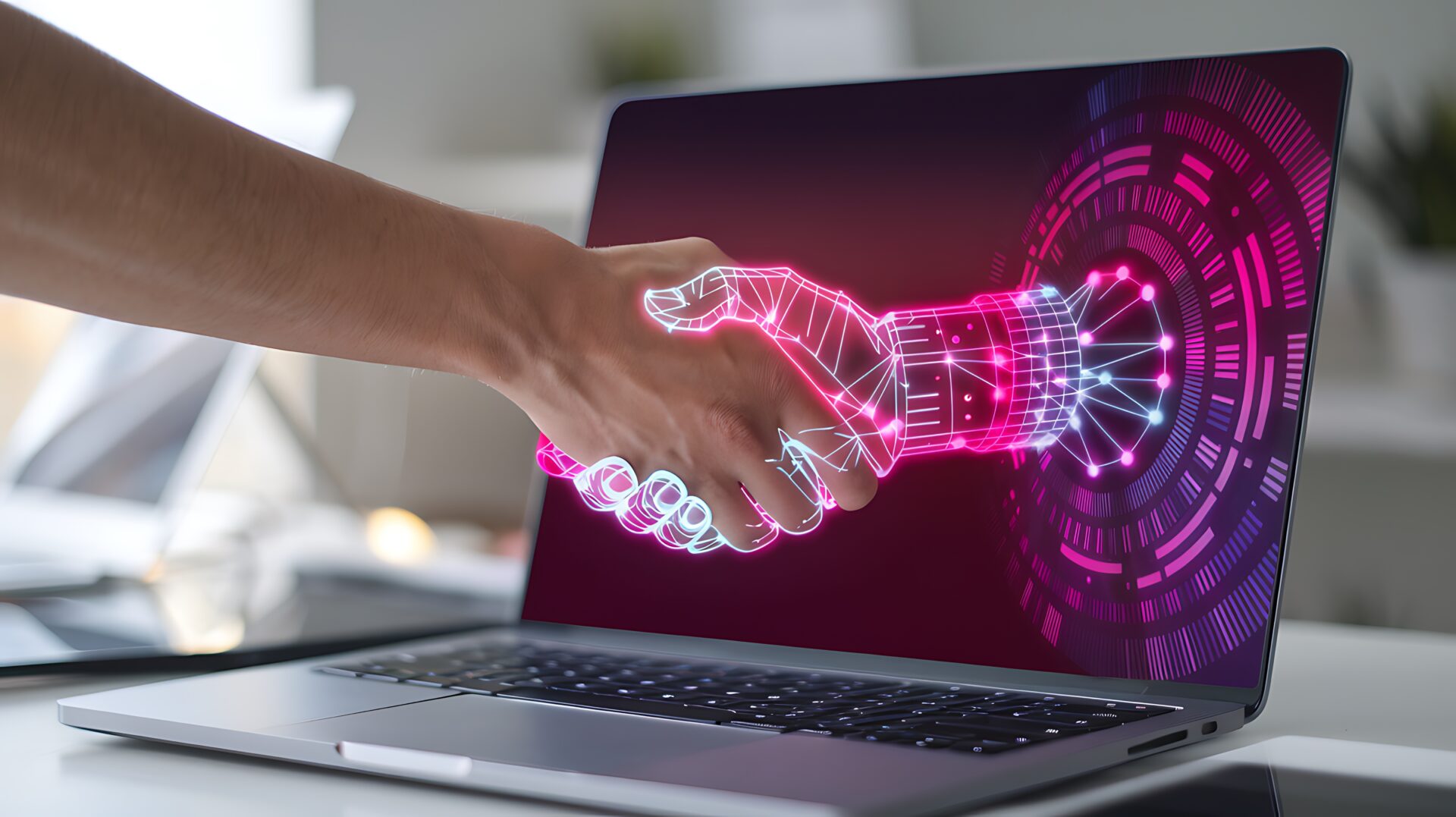

At Smart Impact, we observe a common paradox in the world of digital projects. Your investment is substantial, the technology chosen is the latest, the team is competent, and yet... the project ends up derailed, way over budget or, worse, the tool developed is not adopted by users.
When faced with these failures, the reflex is often to blame faulty code, poorly written briefs or unsuitable technology.
The reality, which we see day after day, is quite different: over 70 % project failures are due to human factors.
We're talking about poor stress management, tense communications, latent conflicts between professions (business vs. technical) or a lack of listening skills.
These problems are not technical, but emotional.
This is where the’emotional intelligence (EI), or emotional quotient (EQ) by analogy with intelligence quotient (IQ): the non-technical skill that is systematically overlooked in digital project management.
It is neither an accessory nor a soft skill. This is the strategic foundation that guarantees team harmony, relevant solutions and, in fine, We are committed to ensuring the success and return on investment of your project.
Find out why integrating emotional intelligence into your processes is not a luxury, but a necessity for success. durability and the performance of your digital investments. Stay the course. We'll show you how.
The human factor: why does “knowing how to behave” come first?
A digital project is a complex set of technologies and processes, but its real engine remains human.
When innovation slows down or mistakes pile up, the cause is rarely the code itself. It lies in the way in which individuals interact and manage their emotions under pressure.
1. Managing stress and uncertainty (team resilience)
Digital projects are, by their very nature, stressful environments. Whether it's a change of scope, the discovery of a critical bug on the eve of launch, or the constant pressure of deadlines, uncertainty is permanent. Emotional intelligence becomes the key to success. resilience of your team.
- Case in point: Imagine the atmosphere when, an hour before a customer demonstration, you discover a major bug. Without emotional intelligence, the typical reaction is to panic, look for someone to blame and defensive blocking. The team wastes precious time on internal tensions.
- Role of EI : an emotionally intelligent leader maintains calm, recognizes the team's emotional charge and directs energy towards the solution. Emotional intelligence transforms stress into energy. constructive focus. It guarantees that teams remain adaptable rather than exhausting themselves to no avail.
2. The challenge of cross-functional communication (the need for empathy)
The gap between technical language (development, IT) and strategic language (marketing, business) is immense. This lack of emotional and semantic translation is a major source of costly rework.
- Case in point: your marketing team asks for an «intuitive, user-friendly dashboard» (a vague, emotional objective). The technical team, with no empathy for the real user need, delivers a crude but technically perfect data table. Result: the tool doesn't meet the need, and you have to waste time reworking the same task (the rework).
- Role of EI : empathy is the ability to understand not what the specifications say, but what they mean. how it feels the customer or end-user. It is this skill that enables the project manager to translate a user's frustration into a relevant technical specification, ensuring that the final product meets the customer's requirements. real emotional and functional needs of the market.

READ : Beyond clicks: how to give your digital marketing a soul?
How can emotional intelligence maximize your return on investment?
According to a 2024 study, 96 % project managers use emotional intelligence techniques to optimize collective efforts.
Emotional intelligence is not an abstract concept of well-being. It is a management skill which directly influences your key metrics: time, cost and customer adoption.
It's the most effective solution for securing the ROI of your digital investments.
1. Conflict reduction: saves time and money
Agile projects are based on debate, constructive criticism and constant prioritization. If these exchanges drift towards personal attacks or unresolved conflicts, the project gets bogged down.
- The cost of conflict: an unresolved conflict can paralyze an entire sprint. This multiplies work time through fruitless discussions and tensions, forcing teams to avoid interaction. Time wasted here is pure money lost.
- IE as mediator : emotionally intelligent leadership (in the project manager, the Product Owner or managers) enables technical criticism to be transformed into shared learning. The ability to listen actively (a core competence of IE) helps to quickly identify the real source of disagreement and keep the group's energy focused on the solution. Resilient teams resolve tensions faster, avoiding costly delays.
READ : Digital mediator consultant, the invisible key to successful projects
2. User adoption and emotional design
IE has a fundamental impact on the final quality of your product, ensuring that it meets not only functional needs, but above all the user's psychological expectations.
- Link to UX : As expert Steve Krug puts it, the first principle of ergonomics is simple: «Don't make me think» (Don't make me think). A product that frustrates or forces the user to think is a product with a low adoption rate.
- Encouraging intuition: empathetic teams truly understand their users' day-to-day frustrations. They create fluid, intuitive and reassuring. Adopting empathy at the design stage guarantees that the final product will be easily adopted, reducing the need to rework costly after launch and immediately maximize the usefulness of your investment.

Emotional leadership for sustainable projects
Emotional intelligence can't be improvised. It requires a framework and a discipline that we are proud to integrate into our methodologies. Smart Impact.
We are convinced that hard skills are not enough. Our role is to help you secure your investments by working on the most precious and volatile asset of all: people.
Our methodology: change leadership
We don't just offer technical skills. We work with soft skills, such as active listening and tension resolution, feedback that transform the working environment and the relationship with your teams.
- Identifying emotional ambassadors : we explain how to identify natural leaders (project managers), Scrum Masters) who become the guarantors of the project's harmony and psychological environment. Their mission is to keep the dialogue open and ensure that emotions are translated into concrete action, not conflict.
- Integration into rituals : IE is integrated into project rituals. For example, during retrospectives, emphasis is placed on how the team managed the stress of the sprint, and not just on which has been delivered. This discipline enables your teams to capitalize on emotional experience to improve future processes.
The key: resilient, efficient teams
Investing in emotional intelligence means investing in resilience and the performance supported.
- Project stability : you move from teams that suffer stress to teams that transform stress into resilience. The result? More predictable projects, with fewer budget shifts and last-minute surprises.
- Sustainability of success: by improving the quality of cross-industry communication, we ensure that the final product better matches the user's needs, thus maximizing the adoption rate.
Emotion: the future of agility and the foundation of your sustainable growth
Gone are the days when technical expertise was enough. Technological performance is nothing without psychological harmony and the ability to adapt.’emotional alignment of your teams and users.
Emotional intelligence is the next frontier of agility. It's the key to reducing hidden costs, boosting performance, and ensuring that your innovations are not only delivered, but above all, understood. adopted and loved ones.
At Smart Impact, we're here to help you build that solid human foundation. Your investment in EI is the most strategic investment you can make to ensure your digital strategy's optimal human and financial success.
Contact us to help your digital projects reach their full potential.
Join us on Linkedin.

Co-founder of Smart Impact.Passionate about the web from the outset, he launched his first project in 2006: an online music magazine that is still running today. With almost 20 years' experience in SEO, a federal diploma in marketing and a solid geek culture, he and his team transform customers' (sometimes vague) ideas into concrete digital projects.