
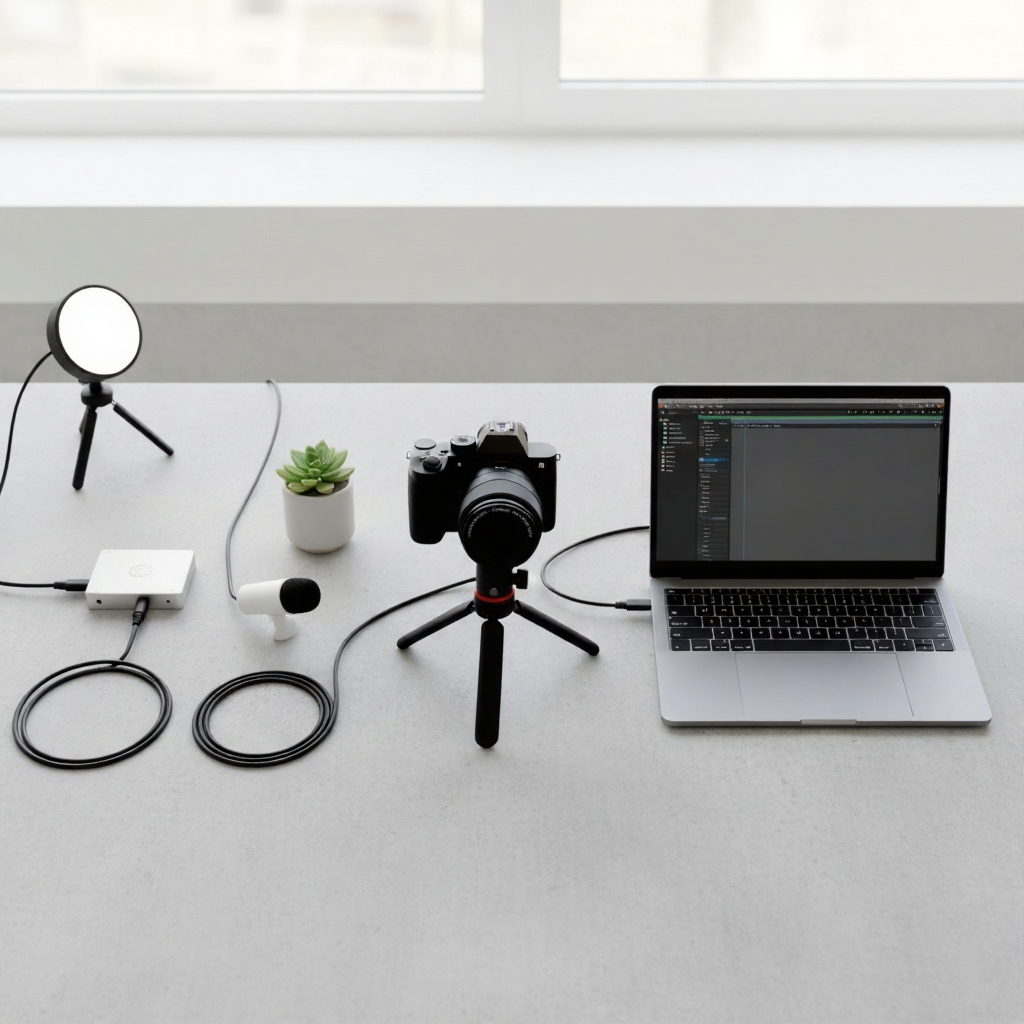

It's simple, raw video content converts better: towards a strategy of editorial sobriety
In an ecosystem saturated with over-produced visual content, where every video seems calibrated for TikTok or LinkedIn, a discreet but strategic trend is gaining ground: the return to raw content. No dressing. No effects. And even less artificial storytelling. Just clarity, expertise and a willingness to get straight to the point.
This shift is not a fad. It's a lucid response to a structural change in the way audiences consume - and, above all, decide. Drawing on recent data, field observations and a number of concrete case studies, this article offers a fundamental analysis of why “raw” content - or, more accurately, content that is not "raw" - has become the norm. clean, could well become the most powerful tool in video marketing by 2026.
The silent saturation of “perfect” videos”
Since 2020, the production of so-called «professional» video content has exploded. With the democratization of tools like CapCut, Descript, Runway or Canva, creating a dynamic, edited, subtitled and animated video has become accessible. The result: all content ends up looking the same.
Ambient music, fast cuts, punchy subtitles, face-to-face camerawork, storytelling in 3 acts... Formats are mastered, signals are standardized. And that's where the problem begins.
According to the State of Video Marketing 2024 (Wyzowl) :
- 91 % of marketers say video improves their visibility
- But only 24 % consider that it has a real impact on leads generated
This misalignment between reach and performance reflects a form of implicit saturation. Too much content looks like campaigns, not answers. Attention is captured, but rarely converted.
What cognitive science says: pleasure ≠ commitment
When a video is aesthetically pleasing, rhythmic, “just like on TV”, it generates activation of the rapid reward system: dopamine, short-term pleasure, passive consumption logic.
But this type of content leaves little room for analysis, reflection or personal projection. This has been shown by a number of studies, including one carried out by the Center for Neuroeconomics Studies (University of Pennsylvania, 2021):
- Content rich in visual stimulation activates immediate gratification networks (system 1, Daniel Kahneman)
- Sober, explanatory content triggers activity in the prefrontal cortex (decision-making, projection, evaluation)
In other words: what's pleasant to look at isn't necessarily what triggers the desire to act - as we discuss in this article on buzz.
Case study: Alex Hormozi's radical pivot
In 2025, American entrepreneur Alex Hormozi, used to highly edited videos with special effects and intense storytelling, decided to try a radical approach. He cut out everything: transitions, animation, staging. From now on, he films his content in one-take, face-to-face, without editing.
The results are documented:
- Drop in views: -90 % on average
- But: +100 % on sales of his book
- +26 % opt-ins on its newsletter
- +68 % value per viewer (revenue generated / number of views)
Less reach, but much higher audience quality. Fewer viewers, but more buyers. What it loses in reach, it gains in conversion. An equation worth thinking about.
Why raw content acts as a filter
Raw video isn't “just” faster to produce. It's also more effective at targeting the right profiles. It works like a natural filter:
- It eliminates passive spectators looking for a moment's distraction
- For those who want a clear answer to a specific question
In the context of an inbound strategy, this creates a form of implicit pre-qualification. If someone is watching a sober 6-minute video on an SEO audit or a thermal renovation plan, he or she is already in the active analysis phase. Raw content attracts decision-makers. Smooth content attracts the curious.

Concrete examples in B2B and B2C
🔍 B2B - SaaS in cybersecurity
A cloud security startup decides to film an unedited video: a consultant demonstrates how to audit a misconfigured S3 bucket, in real time, by screen-sharing.
The result: 3 requests for appointments in 48 hours, even though their “produced” videos had only generated likes.
🛏️ B2C - Bedding brand
An SME in the sleep sector publishes a 5-minute video, without music or editing, in which an expert explains sleep cycles and how the wrong bed base can disrupt them.
Result: +38 % clicks on product sheets in the following days, without paid advertising.
The 4 sober formats that convert better
No need to reinvent the wheel. Here are the formats most commonly used in a sober content strategy:
1. Slides + narration
A commented slideshow. 5 to 8 simple slides, with a clear voice. Used to explain a concept, break down a method, or structure a mini-training session.
2. Whiteboard
Either physical (flipchart, slate) or digital (Miro, Figjam). The perfect format for illustrating a process, an action plan or a hierarchy of ideas.
3. Screen sharing
Ideal for demonstrating a tool, carrying out an audit or supporting a process. The viewer sees what you see. And it's not sexy, but it's reassuring.
4. Video podcast (or on-camera solo)
No editing, no gimmicks. Just one person talking about a subject, in depth. The favorite format for consultants, experts, therapists or trainers.
👉 All these formats are quick to produce, authentic, and above all require preparation in terms of content, not form.
Why does it work? The strategic summary
| Profit | Mechanism activated | Business effect |
|---|---|---|
| Credibility | Perceived authenticity, striving for clarity | Increase in conversion rate |
| Clarity | Less cognitive distraction | Better understanding of the offer |
| Speed | Leaner production, faster feedback | Test & learn, frequency multiplied |
| Filtering | Self-selection by format | More qualified audience |
What raw content isn't
- This is not amateurism. It requires a clear structure and strategic intent.
- It's not just for B2B. It also works for e-commerce, health, home and education brands.
- It's not “less good”. It's just another approach to quality: clarity rather than aesthetics.
Raw video is not a miracle solution. However, it is a lever particularly suited to contexts where the aim is to educate, qualify and trigger action, not just generate reach.
Where to place it in your content strategy?
Raw is not intended to replace everything else. It complements.
| Objective | Recommended contents |
|---|---|
| Notoriety | Inspirational product content |
| Acquisition | Raw, demonstrative content |
| Nurturing | Sober webinars, educational series |
| Loyalty | Podcast, audio newsletters |
Operational framework: production without complexity
Minimalist production checklist :
- 🎯 Precise, solution-oriented topic
- 🗂️ Clear 3 to 5-point plan
- 🎤 Tie microphone or single headset
- 📱 Recent smartphone or HD webcam
- 🧹 No assembly except simple cuts (unnecessary noise or silence)
Ideal duration : between 4 and 8 minutes.
Recommended pace : 1 raw format per week to maintain regularity and refine quality over time.
In brief
Raw video doesn't try to appeal to everyone. It speaks to the right people. It's not there to seduce, but to convince.
This format, long seen as secondary or reserved for independents, is now becoming a relevant strategic choice. Cheaper. Faster. And often far more effective.
In a world of ultra-visibility, brands that know how to speak clearly to their target audience will always be one step ahead. And sometimes, that clarity starts... with a video shot in one take, with no frills, but with a real point of view.

Co-founder of Smart Impact.Passionate about the web from the outset, he launched his first project in 2006: an online music magazine that is still running today. With almost 20 years' experience in SEO, a federal diploma in marketing and a solid geek culture, he and his team transform customers' (sometimes vague) ideas into concrete digital projects.